
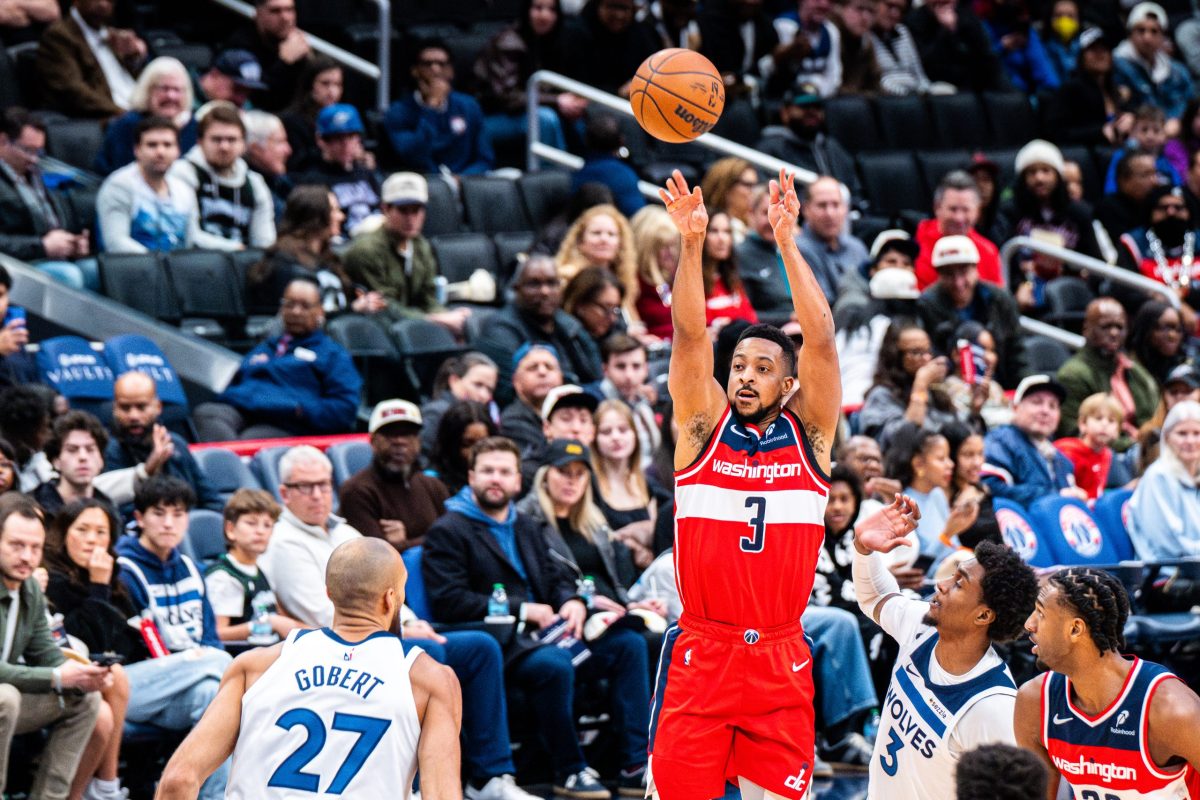
The Washington Wizards continued their long-term approach to roster building by acquiring Trae Young in a trade with the Atlanta Hawks, adding a proven offensive centerpiece to a team still firmly in development.
Under the terms of the deal, Washington receives Young, while Atlanta acquires CJ McCollum and Corey Kispert. No draft picks were included in the transaction, signaling a move rooted more in roster balance and direction than a full-scale asset shuffle.
The Wizards are acquiring Trae Young from Atlanta in a deal centered around CJ McCollum and Corey Kispert, reuniting Young with Wizards executive Travis Schlenk, who drafted him in 2018. #ForTheDistrict pic.twitter.com/8pN9ZprINz
— Double Take Sports (@dbltakesports) January 8, 2026
For the Wizards, the trade is not about resetting a timeline or fast-forwarding expectations. Instead, it reflects confidence in a process that has been unfolding over the past several seasons — one centered on patience, flexibility, and development — and a belief that the foundation is stable enough to absorb a high-usage, high-impact guard.
Trae Young, 27, arrives in Washington as one of the league’s most dynamic offensive players. Known for his ability to control tempo, stretch defenses with deep shooting range, and create opportunities for teammates, he immediately becomes the Wizards’ primary offensive organizer. His presence brings clarity to late-game situations and provides structure for a roster that has leaned heavily on youth and development. Of course, this is all contingent on Young’s health moving forward.
Washington has not positioned itself as a finished product, and this move does not suggest otherwise. The Wizards remain a team building toward sustained competitiveness, evaluating young talent and prioritizing long-term growth. Adding Young is less about changing course and more about defining it more clearly.
Just as significant as what Trae Young brings on the floor is what his reported openness to Washington suggests off it. Around the league, player interest is often a reflection of organizational clarity as much as wins and losses. For a team still developing, being viewed as a viable landing spot, rather than being dismissed outright, is meaningful. It signals that players and representatives are recognizing opportunity in Washington, even if contention is still ahead.
From a roster standpoint, the Wizards part with McCollum, a veteran scorer whose experience and expiring contract made him a valuable trade asset, and Kispert, a reliable perimeter shooter who had carved out a defined role. The decision underscores Washington’s willingness to consolidate complementary pieces in favor of a singular offensive focal point.
There are, naturally, questions that will follow. How Young’s style fits defensively, how the roster evolves around him, and how Washington balances development with competitiveness will all shape the next phase of this build. But those questions exist within a framework the Wizards have already committed to, not one created by this trade.
Ultimately, the Wizards didn’t acquire Trae Young to redefine who they are. They acquired him because they believe in where they’re going, and in their ability to integrate a proven star into a process that’s still unfolding.