
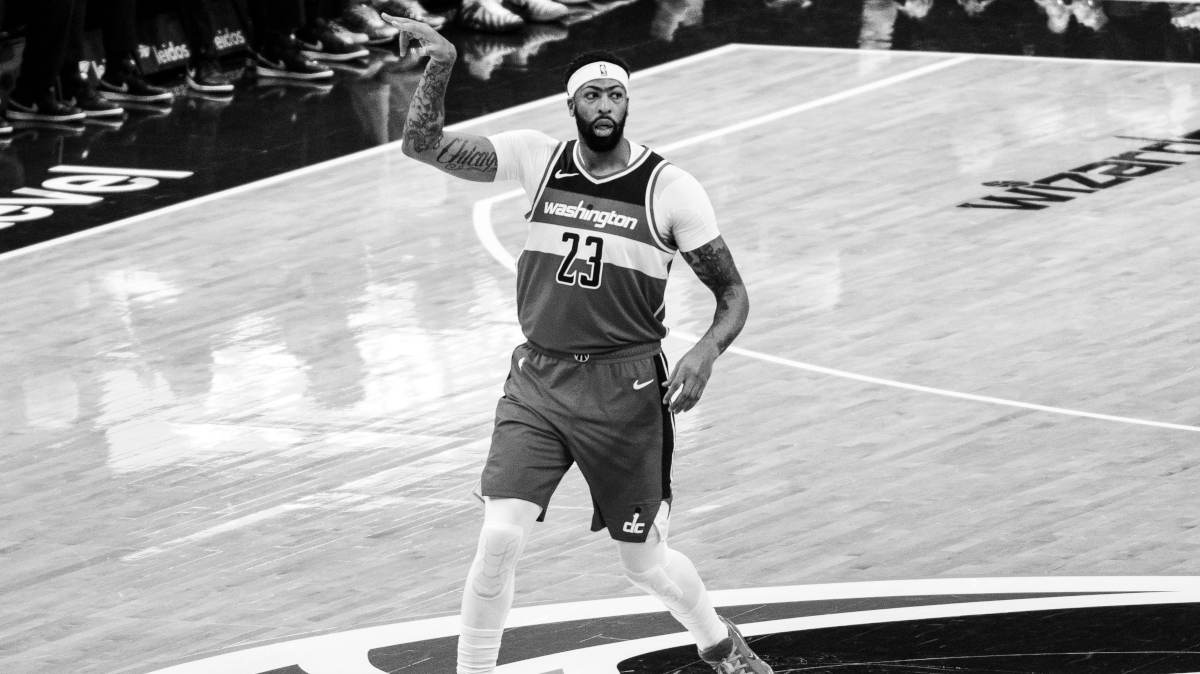
Anthony Davis understands that building a winning team takes time. As the Wizards work toward consistency, his job includes helping his teammates understand how to use that time.
There are habits to establish, mistakes to correct and difficult stretches to navigate together. Davis sees progress in how Washington is handling those challenges. He also expects that development to produce wins along the way.
“To get to where we want to go, it takes time,” Davis said. “But we got to be able to win games within that period.”
Asked by Double Take Sports how his veteran experience helps him remain patient through the process, Anthony Davis credited the young players learning to manage the demands of an NBA season. He immediate thought about AJ Dybantsa, whose introduction to the league has already included an eight-game losing streak.
“A lot of these guys come off, you know, like AJ, he’s been winning his whole life,” Davis said. “And then you come into this situation.”
Guiding his less experienced teammates through that adjustment requires perspective. Davis wants them to understand that improvement takes sustained work, whether they are building chemistry over a season or trying to recover from a deficit within a game.
Washington’s recent loss to Boston offered an example of the latter. Despite falling behind, Davis said the Wizards remained together in the huddle.
“Guys weren’t, you know, arguing or separating,” he said. “We’re always close…and together.”
The message was to work through the deficit one possession at a time.
“We’re not going to hit home runs in this game and now all of a sudden the game is tied,” Davis said. “We’re going to hit singles, doubles.”
That meant getting a stop, scoring and returning to the defensive end ready to do it again. If Boston scored, Washington needed to get the ball out quickly and keep pushing.
For Anthony Davis, the composure to follow that approach represents progress.
“Even within the game, you know, guys are learning patience and that it takes time,” he said. “That’s growth on our part.”
The next challenge is pairing that composure with consistent effort from the opening tip. The Wizards surrendered 80 first-half points against Boston before increasing its defensive intensity and cutting the deficit to five.
The response showed Davis what the Wizards are capable of. The start reinforced how much work remains.
“I do like the fight and the resilience that we showed in the second half,” Davis said. “But you see that it takes the full 48.”
Dybantsa’s assessment of his own performance reflected that same need for accountability. While he felt he rebounded well and helped involve his teammates offensively, he was direct about his struggles defending Boston’s wings.
“I was just getting hit on the screens, just being candid,” Dybantsa said. “Just dying on those screens.”
For a player who wants to become one of the league’s better defenders, those possessions provide specific areas to address. Dybantsa acknowledged that he needs to navigate screens more effectively and make shots tougher for the players he is guarding.
His outlook on the season allows room for that improvement. Dybantsa has described the NBA schedule as a marathon, recognizing the adjustment from college and the opportunities still ahead to get better.
“Obviously we don’t want to be in no slump. We don’t want to go in losing streaks, but we have a lot of games to make it up,” he said.
That longer view comes with goals for his daily approach. Dybantsa identified his pace, decision-making and defensive intensity among the areas he wants to improve. He wants to let the game come to him, make quicker reads and avoid taking possessions off.
“I want to be way better overall by game 82,” he said.
Getting there requires the kind of honest conversations Washington had at halftime against Boston. According to Dybantsa, players spoke before the coaches entered, with veterans and young teammates contributing. Then the film made their effort difficult to overlook.
“It just looked bad on camera,” Dybantsa said. “That’s not who we want to be, so you’ve just got to change that effort level, and that’s what we did.”
Those conversations give the Wizards something to build on. Players are identifying mistakes, speaking up and responding to what they see. Their task now is to carry those habits into complete games.
Anthony Davis believes Washington has demonstrated its defensive potential. Turning those stretches into a dependable standard requires each player to accept the demands that come with it.
“Every possession matters when you want to be a great team and do something special,” he said.
His experience helps him remain patient as those habits develop. It also shapes the expectations he is setting. Davis was emphatic that the Wizards cannot repeat the extended losing streak it has already endured.
“We’re not doing any more, you know, eight-game losing streaks and all like that,” he said. “That’s not happening.”
As the Wizards move forward, Anthony Davis is asking them to learn from each performance and apply those lessons to the next. He sees a group beginning to understand how to stay together through adversity. Now, Washington must make its effort as consistent as its resolve.
“We’re not panicking,” Davis said. “I think we’re just taking a game at a time, just trying to get better, you know, each and every game.”