
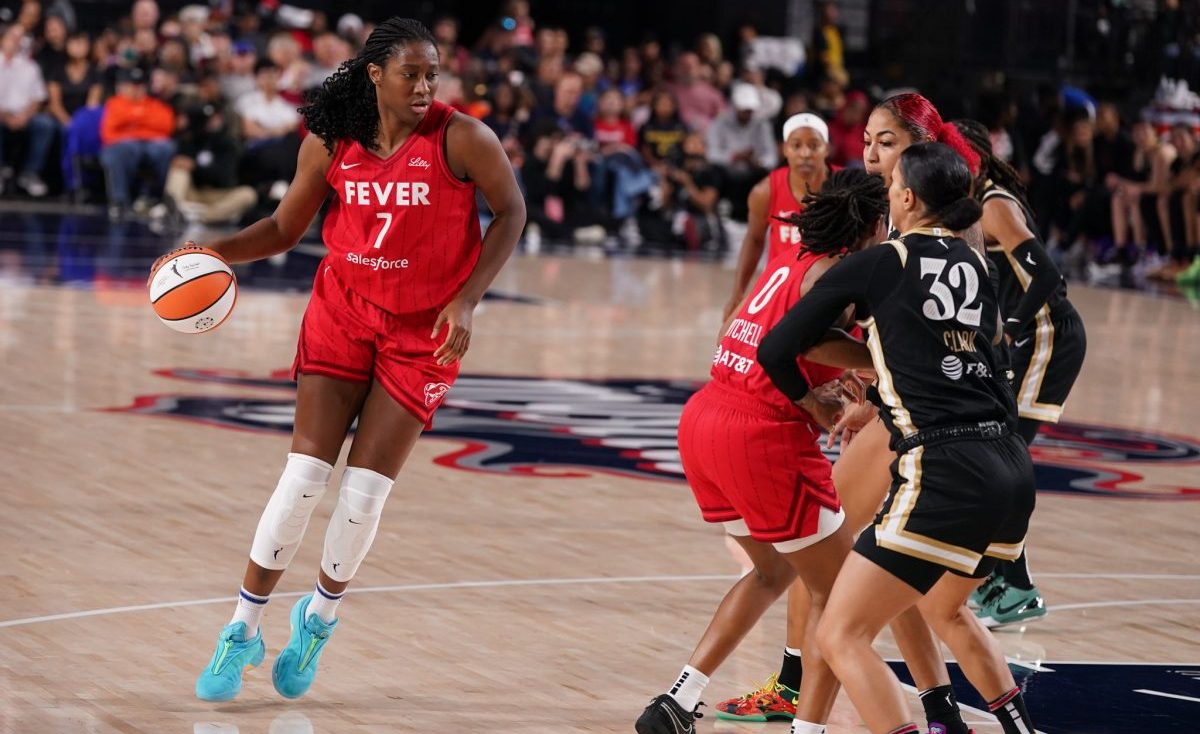
The WNBA recently released its most ambitious schedule in league history: 44 games per team, two expansion franchises, and 330 total games across 15 teams. Commissioner Cathy Engelbert called it a celebration of the league’s “unprecedented momentum.”
She’s right. The WNBA is experiencing genuine growth: record attendance, rising stars, and expansion buzz.
But the timing tells a story. This schedule dropped while CBA negotiations are stalled and free agency is frozen. The league is showcasing expansion and revenue growth at the exact moment both sides are negotiating what that growth is worth.
The Revenue Play
Forty-four games per team means more tickets to sell. In addition to that, nineteen games are happening at “special venues,” arenas larger than teams’ usual home courts. Las Vegas brings three games to T-Mobile Arena. Chicago will use United Center. Connecticut takes games to TD Garden in Boston.
The strategy is clear: fill bigger buildings, generate more revenue and prove the WNBA is in demand.
Now add in the Commissioner’s Cup taking over the entire league schedule for 17 days in June with Coinbase sponsorship, and you’re looking at multiple revenue streams working together.
This matters because revenue sharing is the biggest sticking point in CBA negotiations. The players’ union wants about 30% of gross revenue. The league wants to share a percentage of net revenue after expenses.
This schedule, with its expanded games and bigger venues, is concrete evidence of the revenue both sides are in contention over.
Two Expansion Teams, Two Very Different Approaches
The WNBA is adding two expansion teams this season: the Portland Fire and Toronto Tempo.
Portland is the safe play. The Fire returns to a city that supported a WNBA team before, playing in an established NBA arena. It’s a proven market with solid infrastructure and engaged fanbase.
Toronto is the risk.
As the league’s first international franchise, the Tempo represents global ambitions. Their “home” schedule is very telling: four different buildings across three cities. Coca-Cola Coliseum in Toronto, Scotiabank Arena in Toronto, Bell Centre in Montreal, Rogers Arena in Vancouver.
Most WNBA teams build their identity around one city, one fanbase. Toronto is essentially operating as four different franchises depending on the week. Fans in Toronto don’t get consistency of attending regular home games. Players don’t get the rhythm of a true home-court advantage. And the team itself has to establish an identity across multiple markets instead of planting roots in one.
The league is betting Toronto can create a national following rather than a local one. It’s ambitious. It’s also untested.
If Toronto succeeds, it proves the WNBA can work internationally. If it struggles, it’s a very public warning about expanding too fast.
What’s Not in the Press Release
The WNBA’s schedule announcement was polished and optimistic, all about growth, momentum, and celebrating 30 years. But press releases are just as much about what they leave out as they are what they include.
There’s no mention of charter flights, a major player demand. No TV deal specifics beyond “over 200 games” being nationally broadcast. No explanation for why Washington plays just one game at Capital One Arena.
Here’s the context: The previous CBA expired January 9th. Negotiations are in a “status quo” period where old terms stay in effect while both sides keep talking. Free agency is frozen because 75% of the league’s players refuse to sign contracts under old salary structures when massive increases are being negotiated.
The league’s most recent proposal would raise average salaries from $120,000 to over $530,000. Maximum salaries would hit $1 million, up from $249,000.
But players want a percentage of gross revenue. The league wants to share net revenue after expenses. That’s the fundamental disagreement.
So when the WNBA releases a schedule celebrating growth—44 games, international expansion, bigger venues—while negotiations are stalled, it’s worth noting what’s emphasized and what’s not.
The league says the schedule is for logistical planning. But it’s also landing in the middle of the most important CBA negotiations in league history.
The Bottom Line
This schedule is a business document released at a specific moment.
It shows investors the league is expanding. It tells cities considering teams that the WNBA is viable. It proves the league has moved past fighting for survival.
And it documents growth while both sides negotiate what that growth is worth.
The basketball will be great. Caitlin Clark versus Paige Bueckers opening weekend, the Aces chasing a historic winning streak, and new markets in Portland and Toronto.
But if you’re only seeing the games, you’re missing what’s really happening. This schedule dropped during negotiations for a reason, whether the league says it out loud or not.