
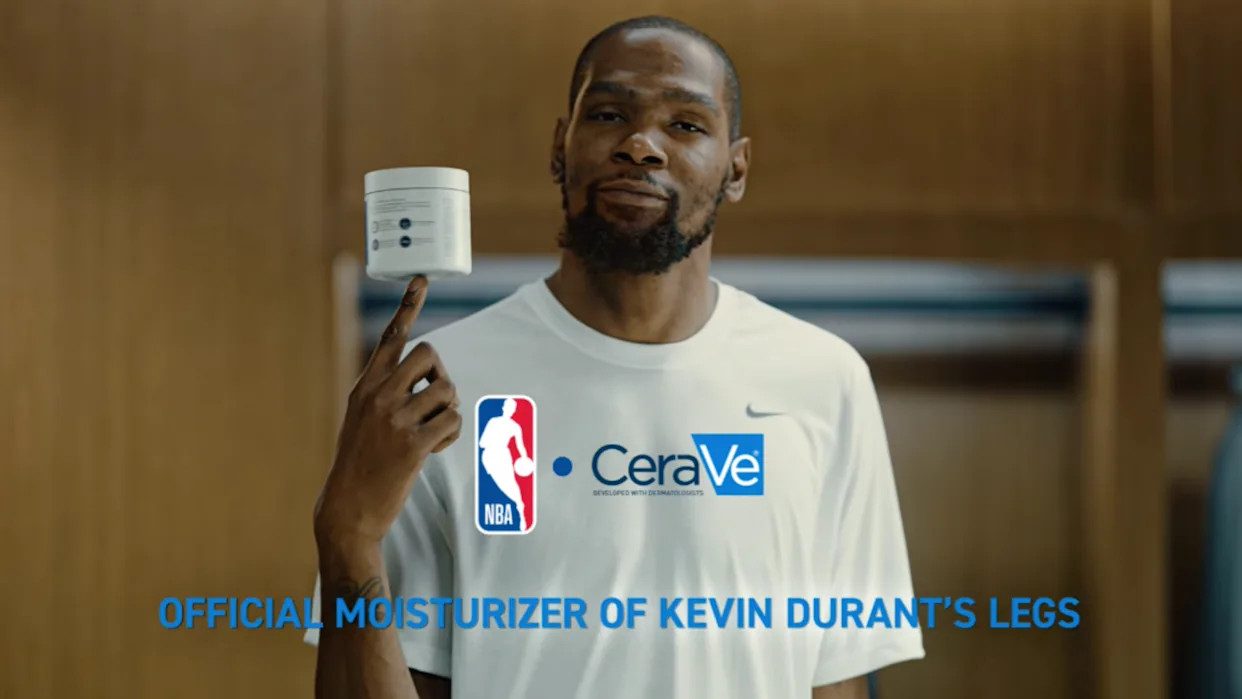
For years, Kevin Durant has been the target of “ashy” jokes all across the internet. Screenshots. Memes. Crowd chants. It became part of his public persona whether he addressed it or not.
Now he’s making it part of the narrative.
When CeraVe expanded its presence in the NBA and partnered with Durant, the alignment didn’t feel accidental. Instead of distancing himself from a long-running joke, he incorporated it into the campaign. What once felt like internet commentary became brand currency.
That shift is what makes the partnership work.
The momentum continued after Super Bowl weekend.
The day after the game, Kevin Durant publicly expressed interest in turning the collaboration into a Super Bowl commercial next year, specifically referencing his legs. It wasn’t a formal announcement. It was a signal. The Super Bowl is the largest advertising stage in American sports, and mentioning it immediately elevates the ceiling of any partnership connected to it.
Can we get my legs a big game ad next year @cerave ? #AD pic.twitter.com/M2xxMW0dmd
— Kevin Durant (@KDTrey5) February 8, 2026
The following day, he posted a separate promotional video emphasizing that everything he does has purpose, including moisturizing, reinforcing the message behind the campaign itself.
Anything I do gotta be official. Even moisturizing. @cerave #CeraVePartner pic.twitter.com/6yFiJZasKP
— Kevin Durant (@KDTrey5) February 10, 2026
Two distinct moments. One consistent direction.
One expanded the ambition of the deal. The other strengthened its foundation.
This is what modern athlete partnerships look like. They aren’t just transactional endorsements. They evolve in public. They respond to culture. They stretch beyond the initial announcement and grow into something larger.
Rather than trying to erase a narrative that already existed, Durant redirected it. By leaning into the joke instead of resisting it, he transformed it into leverage.
In today’s sports ecosystem, perception carries value. The athletes who understand that, and move accordingly, create partnerships that feel aligned instead of forced.
That’s why this move stands out. It’s not about skincare. It’s about ownership. And turning a long running joke into a long-term financial opportunity.