
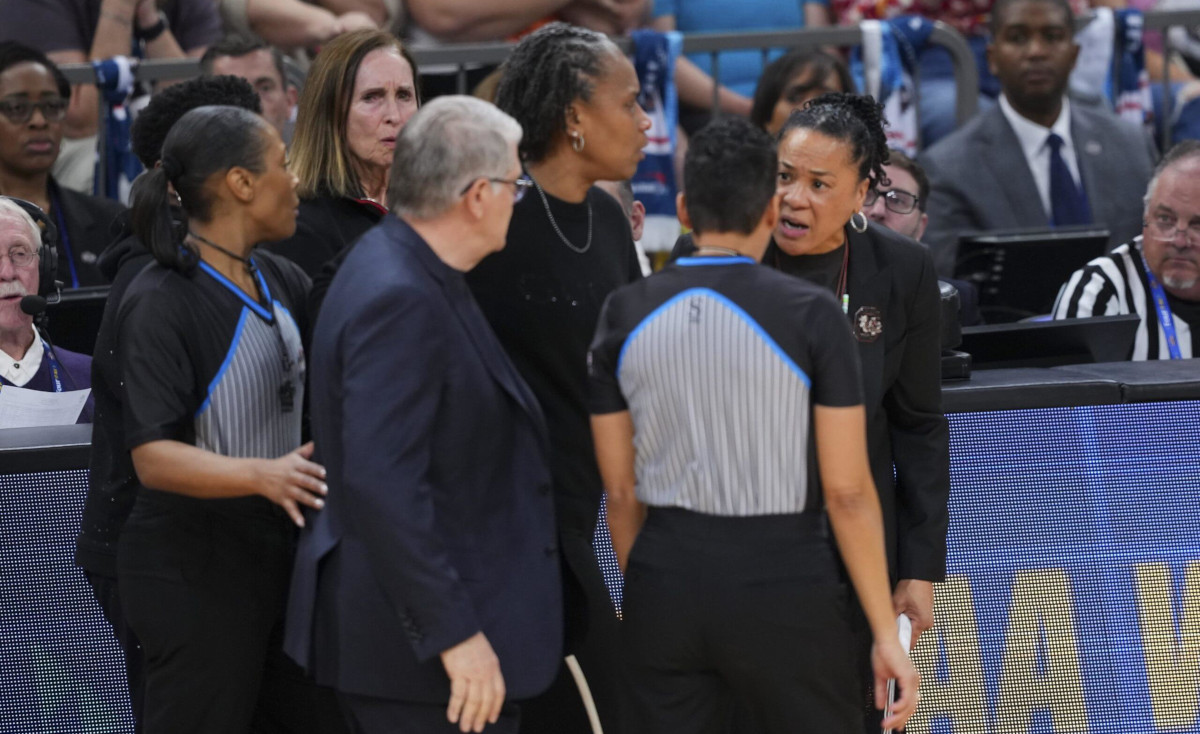
When Geno Auriemma and Dawn Staley had to be separated on the court following South Carolina’s 62-48 Final Four win over UConn and the fallout was immediate. But what followed over the next four days was a masterclass in crisis communication, and a reminder that how you respond to a moment often matters more than the moment itself.
Auriemma released his first statement the morning after the game. More than likely a response to the backlash he was receiving online. As someone with a PR background, I know what an apology statement should include — acknowledgment, accountability, and a direct address to the person you offended.
He admitted there was “no excuse” for how he handled the end of the game and called his behavior “uncalled for.” But he apologized to South Carolina’s staff and team broadly. Dawn Staley, the person he confronted on national television, was never mentioned by name. That was a missed opportunity to fully redeem himself.
Statement from Head Coach Geno Auriemma pic.twitter.com/q8La6lMqN6
— UConn Women’s Basketball (@UConnWBB) April 4, 2026
Geno Auriemma checked a lot of boxes in his statement but it still falls short of a complete apology.
— Double Take Sports (@dbltakesports) April 4, 2026
Here’s why ⬇️
Via @CaritaCParks pic.twitter.com/gHvAUlAdGL
Meanwhile, reporters kept coming to Staley for a response. She didn’t take the bait. In the immediate aftermath, she said nothing could derail her from the task at hand which was focusing on playing in the national championship game. After South Carolina fell to UCLA two days later, she was asked again. She redirected, saying she didn’t want to take anything away from UCLA’s win. That was a choice. A deliberate one.
Then, on her own terms and her own timeline, she released a statement.
Dawn Staley opened with grace. She acknowledged speaking with Auriemma directly. She credited his legacy and called his impact on women’s basketball undeniable. She asked the basketball world to turn the page, not for his benefit, but for the game’s.
From a PR standpoint, that is a precision move. Staley controlled the narrative without appearing to. She set the tone, defined the resolution, and protected her brand all at once. There was no bitterness, no score-settling, no language that could be used against her. Just clarity and class.
And it worked. Hours after her statement published, Auriemma followed with a second response. This time he named her. He said he lost himself. He acknowledged that Dawn Staley, her team, and women’s basketball all deserved better. It was significantly stronger than his first, and it came after Staley had already modeled what accountability looks like.
That sequencing matters. She didn’t demand a better apology. She demonstrated one.
The mission is unchanged – let's grow our game 🫡 pic.twitter.com/mJxqlUy6CK
— South Carolina Women's Basketball (@GamecockWBB) April 7, 2026
Statement from Head Coach Geno Auriemma pic.twitter.com/Ocrc2nF2UP
— UConn Women’s Basketball (@UConnWBB) April 8, 2026
This is what separates good crisis communication from great leadership. Auriemma eventually got there, but he needed a nudge. Staley never needed anyone to show her the way. She walked into a situation where she held all the moral leverage and used it to elevate the conversation instead of win it.
The person who defines the terms of resolution usually wins the room. Dawn Staley defined the terms. And in doing so, she reminded everyone why her standard on and off the court is what it is.