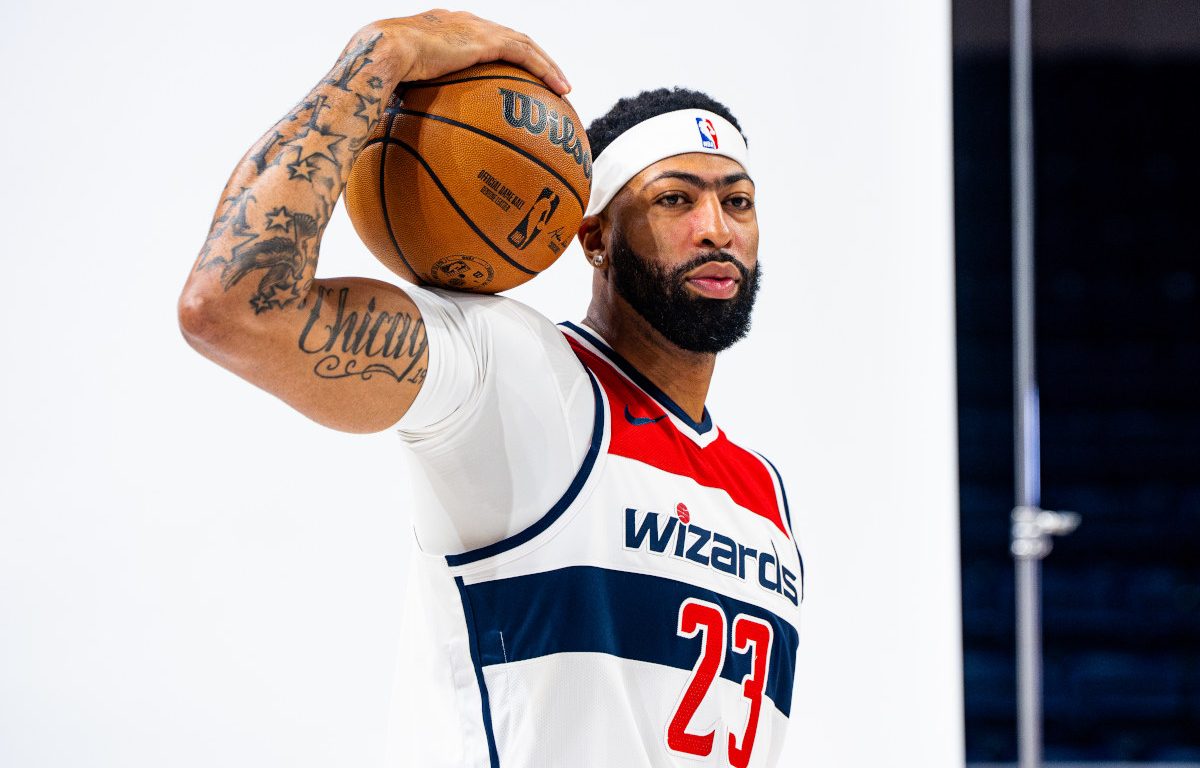
What a ‘Season of Growth’ Means for the Wizards Depends on Who You Ask
Carita Parks
Photo Credit: Terry Mayo, Jr.
The Washington Wizards have repeatedly framed the upcoming season around one phrase: a season of growth.
General manager Will Dawkins has outlined three objectives to define what that means: developing the roster, creating more moments of competitive basketball and taking steps toward sustained success. He has also stressed that the process will not be linear.
“We know it won’t happen overnight, but we’ll chip away as we’ve done in previous seasons,” Dawkins said.
GM Will Dawkins says this will be a "season of growth" for the Wizards:
For a Wizards roster built around young talent but strengthened by a significant veteran presence, the phrase makes sense. But in conversations with the players themselves, it becomes clear that growth takes on a different meaning depending on where each player is in his career.
That difference is visible across a roster that includes young players still establishing themselves, veterans entering new chapters and a No. 1 pick beginning his NBA career under the weight of considerable expectations.
Deandre Ayton has talked about the season with a mix of patience and urgency. He understands that Washington is still figuring out what kind of basketball it wants to play, but he does not view development as a reason to simply accept losing.
“I think we’re hunting for moments to have competitive basketball and have those bursts and grow off of those bursts,” Ayton said. “We have the pieces, but we have to see how everything lays out throughout these games.”
That process, in Ayton’s view, still comes with an expectation to compete.
“Our goal is to really just compete every night and really grow from every game,” he said. “Losing is not an option for us.”
That balance may be one of Washington’s biggest challenges this season: giving a developing roster room to grow while still expecting that progress to show up in more competitive basketball.
For Tre Mann, the season carries a much more personal set of stakes.
“Just to reignite my career, really,” Mann said. “Coming from Charlotte, not playing a lot. You know, being year five … just coming out here and reigniting my career, showing that I can still play in the NBA. I’m a good player. I can contribute to winning.”
Mann believes there is still more of his game the league has not seen.
“I don’t think nobody knows what I’m capable of,” he said. “It’s really showing everybody, proving to myself that I can do it.”
Fatherhood has added another layer to that motivation. Mann said he now wants his son to be able to watch him play, look up to him and be excited to come to games.
Tre Mann enters Year 5 with something to prove. More on what he wants to accomplish with the Wizards ⬇️ https://t.co/jAF761axxu
If Mann enters the season trying to reestablish himself, AJ Dybantsa begins from the opposite end.
The No. 1 pick enters his first NBA season carrying a level of expectation the Wizards have not had at the top of the draft since John Wall. When asked what pressure he felt entering the season as the franchise’s first No. 1 pick since Wall, Dybantsa’s answer was immediate.
He later explained that having veterans and established players around him helps take some of that pressure off, giving him room to grow without feeling as though everything rests on him from the start.
Washington has the luxury of allowing its top pick to blossom alongside players who have already carried significant NBA responsibilities rather than asking him to become the answer to everything from Day 1.
At the other end of the experience spectrum is Anthony Davis.
Will Dawkins said before Media Day that Davis was motivated to remind the basketball world who he is. Davis, however, focused less on outside perceptions when discussing what he wants from this season.
“I haven’t played basketball in a long time — for me it seemed like a long time — since January with the hand injury,” Davis said. “So I’m excited just to get back on the floor again and just dominate the game on both ends.”
He made clear that whatever narratives exist around him are not where he plans to place his energy.
“I don’t try to feed into that,” Davis said. “I’m going to go out and just do what I have to do and let my game do the talking.”
His goals also extend beyond his own production. Davis said staying healthy is a priority, but so is helping Washington’s younger players understand what it takes to succeed at this level.
“I’ve been there,” Davis said. “Been around people who’ve been there, other players, coaches, and just trying to give everything I’ve learned over my career to these guys.”
By the end of training camp, the idea of growth was also showing up in the way the Wizards were functioning as a group.
Will Riley saw it in the way players competed.
“You can just see everyone’s going at it,” Riley said. “No one’s taking plays off.”
The mentorship Davis and other veterans talked about was also beginning to show up on the court. After Saturday’s scrimmage, head coach Brian Keefe highlighted their communication — recognizing coverages, sharing what they were seeing on the floor and helping teammates work through adjustments in real time.
None of it guarantees results. But the competition, communication and willingness to learn from one another offer an early glimpse of what the Wizards hope this season can become.
The Wizards have called this a season of growth. After two weeks of conversations with the players seeking to make that a reality, one thing is clear: there isn’t just one way to define it.